Walking is a beautiful thing

There are many people in the Steppers community from seasoned elders, out of towners, and dance experts for other genres with their various definitions of what “WALKING” is and what the Walking music is. This article won’t debate the merits of any one individual’s definition of what walking is and is not. Clearly it is a well established fact that “no two men walk alike.” I will leave the debating to the experts. I’ll share what was passed down to me about the art of walking from the perspective of a rhythm dancer whose gift was instilled from family and matured from the many great individual walkers that I witnessed over the years. What I learned about playing walking music came after becoming one of the most prolific steppers DJ’s in the history of the partner dance. However, I intend to keep it simple and call WALKING “a beautiful thing”.
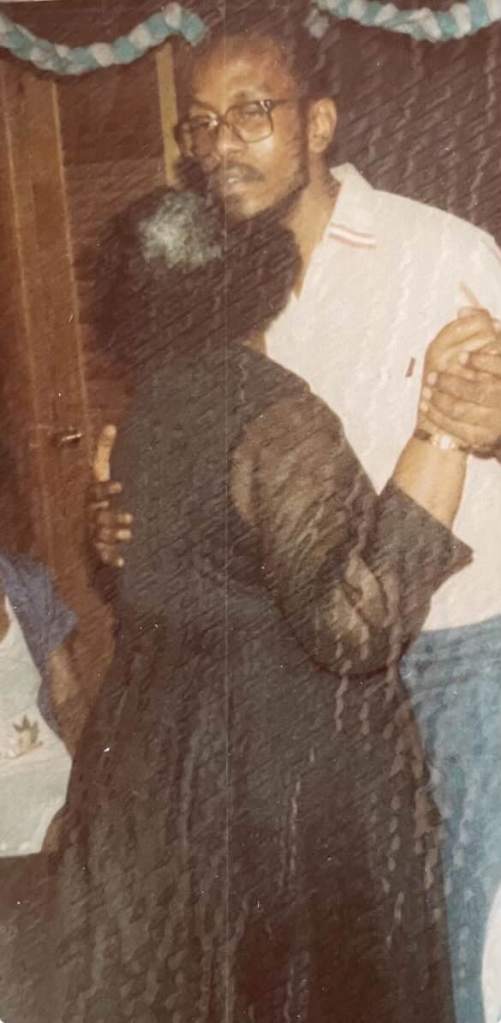
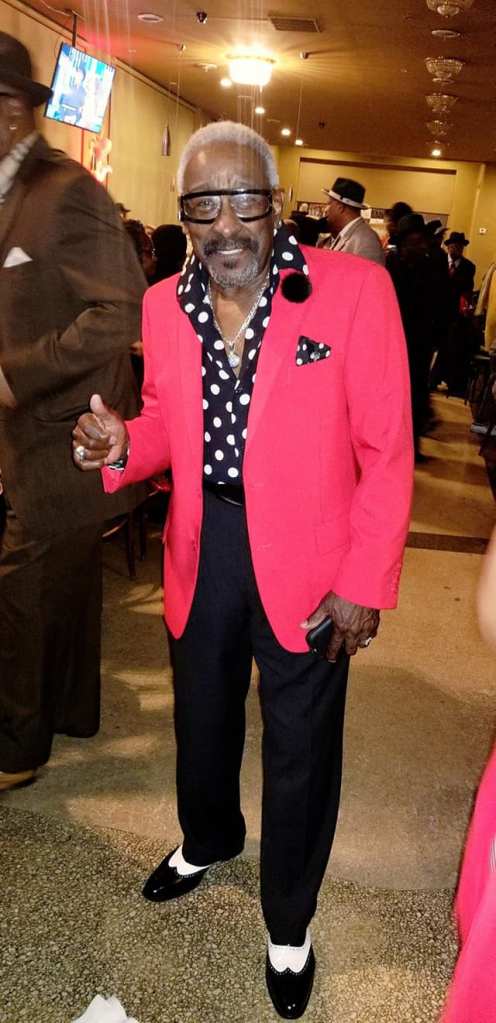
Walking, for me, is a rhythm dance that showcases excellence in execution. I learned to walk in the tradition of elders who are in their late 70s to mid-80s. As a young adult, I watched and took notes from the many gentlemen and ladies in the clubs and ballrooms of Chicago. Walking is an art in motion. And most elders who walk can also Bop and Step, as well. I see Bopping, Stepping, and Walking as “one dance.”

The Chicago style of walking that I speak of is unique to the Chicago area; I’m proud to say, and the truth is no one walks like a Chicago man. The Chicago Style is simple, elegant and straightforward. Most of the men who are walkers from Chicago #1 prefer to dance on the outside lane #2 and does something different in every corner of the floor #3 does everything humanly possible to maintain the spacing to keep the flow of the walking parade nice and smooth. And most of all a REAL WALKER, respects and never violates the personal space of ANY WOMAN.

There is a single misnomer on the set that is crippling the growth of the art form, and that single misnomer is the perception that walking is an intimate dance. Walking is NOT an intimate dance when executed in the Chicago Style. Walking differs from slow dancing, where bodies are pressed upon each other. Walking is a man presenting himself to the woman in an open position, and the first thing that I DO AND TEACH a woman is to find the rhythm of the music with me before proceeding to WALK in BOTH OPEN and CLOSED positioning. A man should present himself to a woman in a non sexual manner before attempting to embrace her in a close position.

In no way am I attempting to overlook the many “horror” stories shared by women who have become victims to men who have found themselves unable to handle their beauty. In no way am I attempting to discount the feelings of women and men who DO NOT want another individual violating the “personal” space of a significant other. The issue of closeness and boundaries has been an issue with this type of dancing over 400 years, and there are many couples that have successfully navigated the issues of closeness with other in a relationship.

The best advice is to listen closely to your partner and act accordingly to do what is best for your relationship.

Finally, for Walking to flourish again, it needs the help of present-day musical engineers to believe that Walking is beautiful.

Stepping Music is great

There is too much discrimination about the Music in the “steppers” partner dance community. There is a constant battle about stepping Music with too much static between the generations, leaving the true essence of the Music, the set, and sharing in the wide variety of Stepping Music lost.

Too much emphasis is on the “perfect” songs for a specific generation. At the same time, no one seems to have the patience for good Music where everyone, regardless of age, can dance in a sanctuary of togetherness. The beauty of my early experiences in the partner dance community was being exposed to and accepted by the more seasoned dancers willing to help anyone navigate the new experiences on the set. There are too many labels today with the Music that a good stepping song is hard to define. What is the role of today’s musical engineers?

Science and technology have wreaked havoc on defining a good stepping song. Influences from DJ producers and instructor teaching styles have also added confusion. One generation rejects the legacy in favor of growth and change. At the same time, the other generation attempts to preserve a legacy of great Music. And another generation is caught in between, trying to serve as a middle ground for the legacy and present generations. Historically, before 2003, Music was not an issue because the stepper sound and or stepper groove was something unique and different. Boppers, Steppers, and Walkers knew what good stepping music was because it was neither fast nor slow. The essential character of the Chicago Style of Stepping Music was smooth and mellow.

The Chicago Style of Partner dance music has a legacy that has been in place for at least five generations. I partied the way my parents and grandparents did. If my grandmother were alive and her favorite song came on, my muscle memory would direct me to imitate what she did in her youth regardless of the music genre. When my mother first introduced me to partner dancing, that early rhythm remained part of my muscle memory.

However, with the rise of the DJ as a music producer, I’ve noticed a shift in the quality of the Music played on sets. Many edited, remixed, and remastered songs that the DJs created and produced have made their way into the mainstream and played so much that people respond favorably to poorly produced and created musical art. If you keep continuously playing a song, the masses will eventually accept the creation. However, NOT EVERY SONG created and exposed in the Steppers community is a song that is appropriate to the culture or the legacy of Stepping. Many newly created pieces of musical art lack the original Chicago-style characteristics of being smooth and cool. This shift in the perception of what constitutes good Stepping Music in the partner dance community underscores the need for quality control in music production and selection.

Regarding a song being from the past or present, it doesn’t make a difference, primarily if you’ve NEVER heard a song in the first place. How would you know whether it is past or present? Some of my favorite songs to dance to are ones I had NEVER heard before going to a set. Many of those songs were released before l ever went to a set. If I’ve never listened to a song before and can dance to it, what difference does it make the year the artist released it? I listen to the lyrics and attempt to feel the orchestration. If I can feel the vibe from the song, I will dance to it regardless of when it was released. Good Music is Good Music.

Creating the right atmosphere for Boppers, Steppers, and Walkers is not rocket science but requires a skilled DJ. A good DJ understands the partner dance culture and plays Music that invites people to dance or connect with each other through their souls. A sound music engineer will combine familiar Music and introduce new Music to reach those new to the set. The bottom line is to thrive inside a sanctuary of social partner togetherness. A great DJ grasps the dynamics of the set and adapts to the room’s vibe. The great DJ strives to diversify partner dance music by incorporating other genres, keeping the partner dance culture vibrant and intact. As for the community standards, in the words of Funkadelic, ‘Free Your Mind and Your Ass will follow.’ The key is to keep playing good Music and not discriminate between past and present. Let all the Music play!